
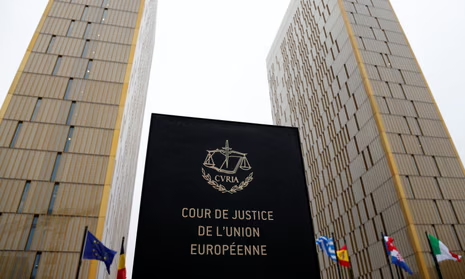
The Grand Chamber has used the decades-long Kraftwerk sampling dispute to draw the boundaries of the pastiche exception, setting out the limits on what artists can borrow from protected works.
The Court of Justice of the European Union, sitting as Grand Chamber, has delivered its ruling in Case C-590/23 (CG and YN v Pelham GmbH), interpreting for the first time the concept of “pastiche” as an exception to copyright and related rights. The ruling directly addresses the legal status of music sampling and, more broadly, defines the degree of creative freedom artists enjoy when working with existing protected material.
The dispute has an unusually long history. The members of the German electronic music group Kraftwerk, or their successors, have been litigating since the early 2000s over a roughly two-second rhythmic loop taken from their 1977 track Metall auf Metall and incorporated on a loop into the track Nur mir by Pelham GmbH. The case already produced a landmark ECJ ruling in 2019 (C-476/17), which dealt with whether such sampling constituted reproduction and whether a separate “de minimis” sampling exception existed under German law. That ruling found it did not. The case returned to Germany’s Federal Court of Justice (Bundesgerichtshof), which then referred a new set of questions to the ECJ, this time specifically about whether the use of the sample could be justified under the pastiche exception, and how that exception should be assessed.
The Directive itself does not define pastiche, and the term had never been interpreted at EU level. The Court begins by noting that pastiche shares common ground with parody and caricature, the other two uses listed alongside it in Article 5(3)(k) — in that all three involve evoking an existing work while presenting perceptible differences from it. But the Court is careful to ensure the three concepts are not legally redundant with each other.
Crucially, the Court rules that pastiche does not require humour or mockery, imposing that requirement would collapse it into parody or caricature and strip it of independent meaning. Equally, the Court rejects a maximalist reading that would make pastiche a residual catch-all covering any creative use of protected material that evokes a prior work, what would make the other two exceptions superfluous and remove meaningful limits on the exception altogether.
Instead, the Court defines pastiche as covering works that evoke one or more existing works, present perceptible differences from them, and engage with them in a form of artistic or creative dialogue that is recognisable as such. That dialogue can take different forms, such as stylistic imitation, homage, or humorous or critical confrontation, although the defining characteristic is that it must constitute a genuine, recognisable creative engagement with the original, not merely a use of protected elements as raw material.
On the question of how to determine whether a use is made “for the purposes of” pastiche, the Court opts for an objective standard: the pastiche character must be recognisable by a person who knows the original work from which the protected elements are borrowed. The subjective intent of the creator is not determinative, what matters is whether the creative dialogue is perceptible to an informed audience. This is a significant practical ruling: it provides a degree of legal certainty by anchoring the assessment in an objective, audience-facing test rather than in the artist’s stated intentions.
The Court frames the entire analysis in terms of the need to strike a fair balance between intellectual property rights on one side, and the freedom of expression and freedom of the arts on the other, as protected by Articles 11 and 13 of the EU Charter of Fundamental Rights. It explicitly states that the pastiche exception must not be interpreted narrowly, but must be read in full conformity with those fundamental freedoms, a framing signalling the Court’s awareness of the broader cultural stakes involved and that tilts, at the margin, toward protecting creative reuse.
It is also worth noting that the pastiche exception, which was optional for Member States under Directive 2001/29, was subsequently made mandatory by Article 17 of the 2019 Digital Single Market Copyright Directive, meaning this ruling now has direct relevance across the entire EU, regardless of how individual Member States had previously implemented the exception.
