
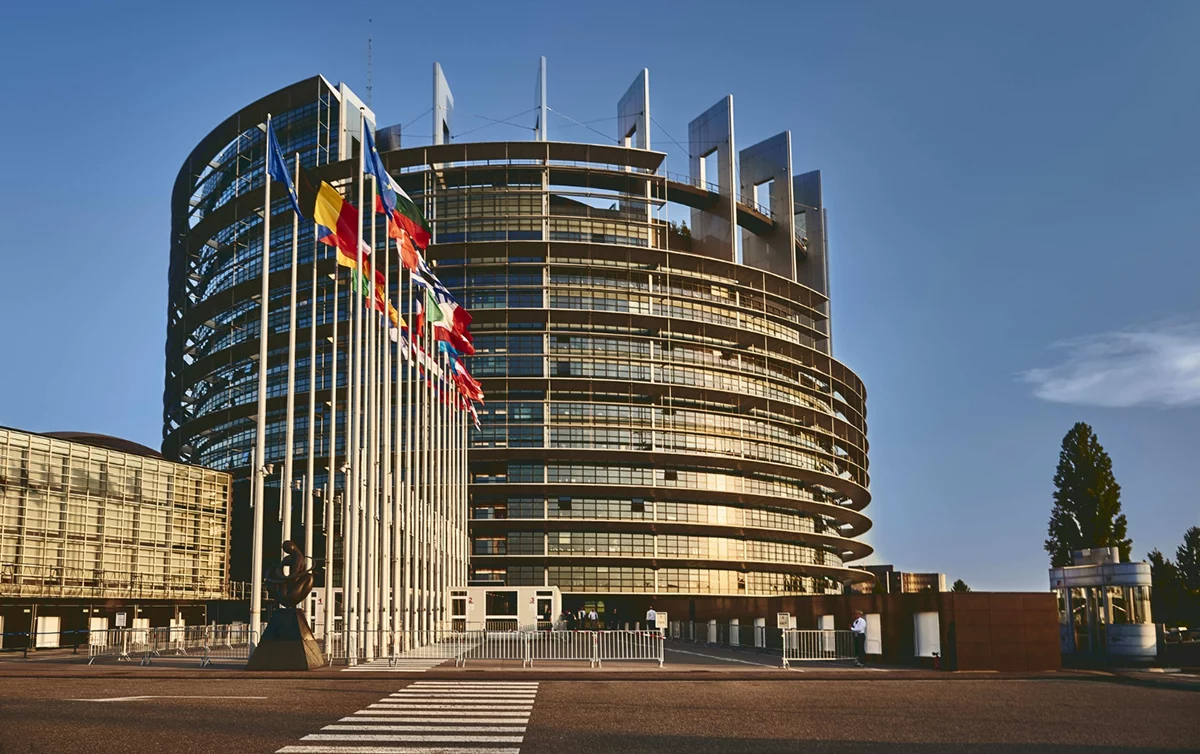
The Council’s annual euro area economic policy recommendation sets a narrow course: fund significantly higher defence spending, complete the Savings and Investment Union, advance the digital euro, all while keeping debt trajectories from deteriorating further.
The Council of the EU adopted its annual recommendation on the economic policy of the euro area on 21 April 2026, setting the policy agenda for the Eurogroup and euro area Member States for 2026-2027. The recommendation is formally non-binding, but it is the authoritative statement of collective fiscal and structural priorities and directly shapes what the Commission presses for in bilateral country surveillance.
The macroeconomic backdrop is more constrained than the Commission had hoped. Real GDP growth in the euro area is forecast at 1.2% for 2026, down from better-than-expected performance in 2025 that was partly driven by front-loading of exports ahead of anticipated US tariff increases. The recommendation acknowledges the US trade environment, describing the euro area as one of the world’s most open large economies that is ‘set to feel the strain of increased global trade restrictions’. Domestic demand is expected to carry most of the growth load, supported by a robust labour market and improving real wages. Downside risks prevail.
On inflation, the picture is broadly stable. Headline HICP stood at 1.9% in December 2025, close to target. The ECB concluded its easing cycle, which cut the deposit facility rate by a cumulative 200 basis points between June 2024 and 2025 to reach 2%, and has halted further cuts. The recommendation notes that policy rates are ‘close to most estimates of the natural rate’, signalling that the ECB is unlikely to move in either direction without a significant change in conditions.
The fiscal section is the most politically loaded. National escape clauses have been activated for 13 euro area Member States through 2028 to accommodate defence spending increases. The ReArm Europe plan and the SAFE instrument — which provides up to EUR 150 billion in loans for defence investment — have generated strong demand. The recommendation calls on Member States to respect their recommended net expenditure paths while making room for defence within those paths through budget reprioritisation, rather than structural expansion of deficits. The average euro area deficit is projected to rise to 3.3% of GDP in 2026; debt to 89.8% of GDP.
Three structural priorities stand out in the recommendation’s operative section. First, the call to develop a European Savings and Investment Union, building on the Commission’s March 2025 Communication — targeting capital market fragmentation, cross-border financial services barriers, and the Banking Union’s unfinished elements. Second, the push to advance the digital euro alongside European-grown private payment solutions, with explicit mention of euro-denominated stablecoins and tokenised deposits as instruments to strengthen monetary sovereignty and reduce dependence on non-European financial infrastructure. Third, completion of national Recovery and Resilience Plans by 31 August 2026, a tight deadline that several Member States are not currently on track to meet.
The recommendation was adopted under the signature of Council President K. Kallas. Its timing — published weeks after US tariff announcements unsettled European markets — gives its trade-related language an immediacy the usual Eurogroup-cycle document rarely carries.
