
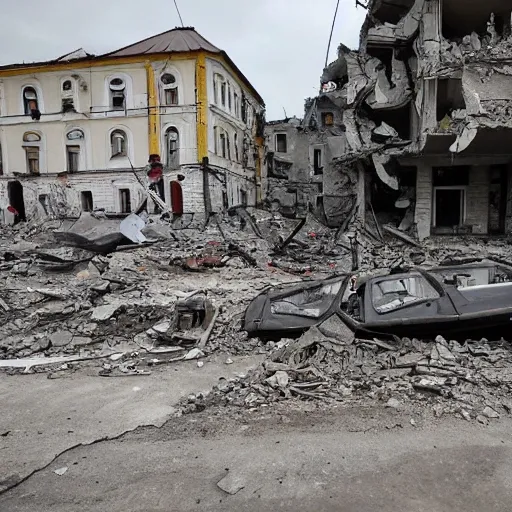
With over 38.3 billion euros committed to Ukraine’s recovery and EU accession, the Commission is assessing whether the money is working for intended purposes. Civil society, businesses, and institutions have until May 7th to contribute to the discussion.
April 4th, 2026 – The Commission is conducting a mandatory mid-term evaluation of the Ukraine Facility, that being, the EU’s primary financial instrument supporting Ukraine’s recovery, reconstruction, and EU accession process. As part of this evaluation, the Commission is involving citizens, organizations, and institutions to submit their views through the Have Your Say portal. The consultation process is open for 12 weeks and responses can be submitted in any of the 24 official EU languages as well as Ukrainian.
Do note: This is not a consultation on future policy, but rather an assessment on whether an existing instrument is working as intended. The results will feed directly into decisions on how the Facility’s remaining resources are allocated and implemented through 2027, and how the Commission may submit legislative proposals based on the findings.
The Ukraine Facility – What is it, exactly?
The Ukraine Facility, established in March 2024, is a dedicated financial instrument that provides support to Ukraine for the period 2024 to 2027, structured around three pillars:
- The Ukraine Plan: This pillar provides up to 38.3 billion euros in loans and grants to the Ukrainian state budget, conditional to Ukraine meeting agreed reform milestones linked to its EU accession process.
- The Ukraine Investment Framework: The UIF supports public and private investment in Ukraine’s infrastructure, energy sector, and key industries, with an explicit role for EU-based private companies in reconstruction.
- Technical and Capacity-Building Assistance: The Facility also provides general support to help Ukraine align its laws and institutions with EU standards, including support for civil society, local authorities, and reform implementation.
What the evaluation assesses, and who do they want to hear from?
The evaluation covers the period from March 2024 to mid-2026, and seeks to examine:
- Whether the Facility has achieved its’ objectives.
- How efficiently its resources have been used.
- How well the EU’s financial interests have been protected.
- What European added value the instrument has generated.
- Whether original objectives remain relevant.
- How funded actions align with EU priorities.
The consultation targets a wide range of stakeholders, including, on the Ukrainian side:
- National authorities
- Local and regional governments
- Private sector actors
- Civil society organizations involved in implementing or monitoring the Facility.
And, on the EU side:
- Commission services
- The European External Action Service
- The EU Delegation in Ukraine
- EU Member States
- EU Financial Institutions
The evaluation is also open to internationally relevant organizations, non-EU financial institutions, civil society, think tanks, research institutions, media, and the private section. Furthermore, all EU citizens may also contribute.
How can I participate?
Responses can be submitted via the European Commission’s Have Your Say portal. The consultation questionnaire is available in English, French, and German, with responses accepted in any of the 24 official EU languages and in Ukrainian.
