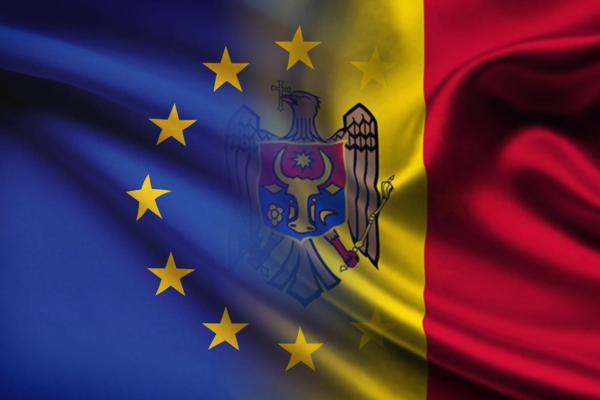
The EU extends measures against Kremlin-linked actors in Moldova to April 2027. The updated list targets Ilan Shor, Vladimir Plahotniuc, and five others accused of election fraud, vote-buying, and coordinated destabilisation of Moldovan democracy.
The Council of the EU renewed and updated sanctions against seven individuals on 21 April 2026. The measures target actors the EU accuses of destabilising Moldova’s democracy on behalf of Russian interests. The legal instruments — Decision (CFSP) 2026/897 and Implementing Regulation (EU) 2026/898 — extend the existing framework until 29 April 2027 and update entries for seven listed persons.
Moldova’s Battle Against Russian Interference
The Moldova destabilisation sanctions regime dates to April 2023, having been adopted to respond to a sustained campaign by Russia-linked actors to subvert Moldova’s political institutions. The country held three major electoral tests since 2024, starting with the Presidential elections in October 2024, which included a constitutional referendum on EU membership, and the Parliamentary elections that followed in spring 2025. The Shor network targeted all of these.
Moldova is now in formal EU accession negotiations, with its October 2024 referendum having enshrined EU membership in the constitution by a thin majority. The result came despite sustained disinformation campaigns, vote-buying operations, and the active financial participation of listed sanctioned individuals. The EU’s decision to extend and sharpen the sanctions list nevertheless reflects concern that the threat has not receded.
Premium Users Only
Ilan Shor, the Man Behind the Machine
Ilan Shor, a Moldovan-Israeli businessman who ran the Sor political party, heads the list. The Constitutional Court of Moldova declared the party unconstitutional in June 2023. A Chisinau appeals court convicted Shor of fraud and money laundering in April 2023 in a bank fraud case, awarding a 15-year sentence in absentia. The bank fraud scheme caused $1 billion in losses and destabilised Moldova’s banking system. Ever since then, Shor operates mainly from Russia and Israel.
The EU’s updated entry on Shor is quite detailed, outlining that he used the NGO Evraziya, based in Russia, and the Victoria/Pobeda political bloc to distribute Russian propaganda in Moldova. He paid protestors to destabilise Chisinau in 2022 and 2023. After the Sor party ban, he continued funding other political formations and attempting to bribe Moldovan politicians. He interfered in the 2024 presidential race, the EU membership referendum, and the 2025 parliamentary elections through vote-buying and targeted disinformation campaigns.
Vladimir Plahotniuc, the Political Fixer
Vladimir Plahotniuc appears at entry five. He was the dominant political fixer in Moldova through the 2010s. Moldovan courts are investigating him for state fund embezzlement, illegal capital transfer, and attempted bribery of the former president. He is alleged to have offered a bag of cash in exchange for political favours. He met Kremlin officials to secure Russian support for interference in Moldova’s 2025 parliamentary elections.
Arina Corsicova, the Media Operator
Arina Corsicova ran media consortiums controlling two television channels: Accent TV and Primul in Moldova, whose licenses were susprended for spreading disinformation about Russia’s war against Ukraine. Despite the licence revocations, Primul in Moldova continues to broadcast online, pushing false content aimed at destabilising Moldova’s constitutional order. Corsicova financed Shor’s electoral campaigns in past election cycles and held shares in Banca Sociala, the bank at the heart of the fraud case.
Maria Albot, the Gagauzian Connection
Maria Albot serves as foreign affairs adviser to the governor (Bashkan) of Gagauzia, the autonomous pro-Russian region in southern Moldova. She also manages the Miron Shor Foundation. She was implicated in the bank fraud case and participates in Shor-directed operations involving coordinated propaganda, mobilisation, and protest activities targeting Moldovan state institutions.
What now?
Moldova stands at a critical geopolitical crossroads, as its EU accession path runs through a sustained battle against Russian interference. The Shor network represents one of the most active and sophisticated vehicle for that interference, set up by a convicted fraudster operating from Russian territory, commanding a network of political parties, foundations, media outlets, and street mobilisers. The extension to April 2027 places the sanctions firmly in Moldova’s accession negotiation window, signalling a continued political commitment to defending one of the EU enlargement process’s most vulnerable candidates.
