
The new Delegated Regulation 2026/285 establishes the first binding EU methodologies for certifying permanent carbon removals via direct air capture, biogenic capture, and biochar, which stands at the center of the Union’s new carbon removal framework.
The European Commission adopted Delegated Regulation (EU) 2026/285 on 3 February 2026, establishing the certification methodologies for permanent carbon removal activities under the EU Carbon Removal Certification Framework (CRCF), which was itself established by Regulation (EU) 2024/3012 of 27 November 2024. The regulation covers three specific activity types: direct air carbon capture and storage (DACCS), biogenic emissions capture with carbon storage (BioCCS), and biochar carbon removal (BCR). These were identified as the highest-priority group for initial rulemaking on the basis of their relative technological maturity and their potential contribution to the Union’s net-zero trajectory. The regulation entered into force twenty days after publication in the Official Journal, subject to the outcome of the parliamentary scrutiny period.
The CRCF itself was a landmark piece of legislation, the first EU framework specifically designed to certify the quantity and quality of carbon removals rather than simply regulate industrial emitters. While the EU Emissions Trading System (ETS) has long governed emissions reductions, there was no equivalent credible legal infrastructure for carbon removal claims. The CRCF fills that gap, creating a voluntary certification system with mandatory quality criteria, third-party verification requirements, and a registry for certified units. The delegated regulation now provides the technical substance without which that framework could not function in practice.
Certification under the regulation is voluntary, as operators may apply through accredited certification schemes, which are themselves subject to Commission recognition. Activity periods for DACCS and BioCCS projects may not exceed fifteen years, though operators can open a new period at the end of each cycle by submitting a fresh activity plan. Certification periods are annual, meaning verified removals are formally confirmed on a twelve-month cycle, while the monitoring period extends until geological storage responsibility has been transferred to the relevant national authority under the CCS Directive (2009/31/EC).
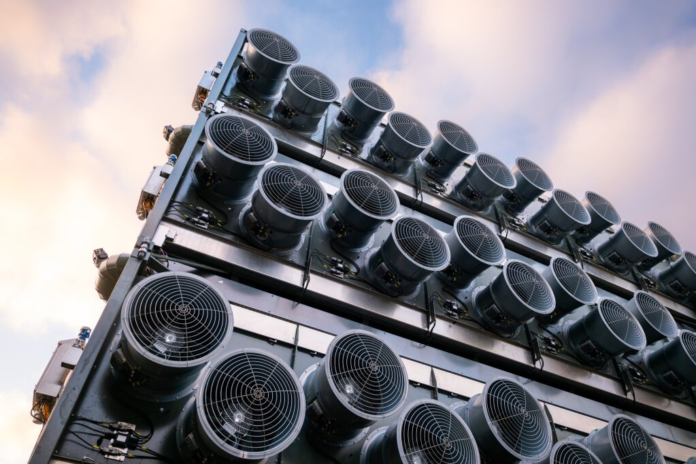
The three activity types covered each reflect a different technological and permanence profile. DACCS captures atmospheric CO₂ from ambient air, with the capture installation required to be located within the Union. BioCCS captures biogenic CO₂ as a by-product of existing goods, energy or services production, it cannot generate biogenic CO₂ solely for capture purposes, and the capture installation must likewise be in the Union. Biochar Carbon Removal involves producing biochar and incorporating it into cement, concrete or asphalt for permanent storage. The baseline for all DACCS and BioCCS activities is set at zero tonnes CO₂ per year, meaning every tonne removed counts as an additional removal.
The regulation is one of two delegated acts anticipated under the CRCF. The second, covering carbon farming methodologies for nature-based removals such as peatland restoration, agroforestry, and soil carbon sequestration, remains under preparation at publication date.
Extended Analysis: Parliament’s Objections
Premium Users Only
The scrutiny process for this delegated regulation exposed a genuine fault line in European climate politics. Under Article 290 TFEU, the Parliament and Council each have a two-month window to object to a delegated act before it enters into force. A resolution of objection was tabled on 23 March 2026 by MEPs Tiemo Wölken (S&D), Michael Bloss (Greens/EFA), and Martin Günther (The Left), and was put to a plenary vote on 26 March 2026. The resolution did not command a majority, and the regulation therefore survived scrutiny and entered into force as planned, but the fact that the objection reached plenary at all is significant for understanding where the political tensions in this dossier lie.
The objectors’ concerns, as articulated in the resolution’s recitals, were substantive, rather than performative. The European Scientific Advisory Board on Climate Change had flagged that permanent removal technologies such as DACCS and BioCCS, while offering geological-scale permanence, face challenges including lifecycle emissions, high resource requirements, moderate technological readiness, infrastructure needs, and public acceptance issues. For BioCCS specifically, the Advisory Board also noted risks from land-use effects of feedstock biomass. The objecting MEPs argued that the methodologies as adopted were insufficiently stringent on lifecycle emissions accounting and did not adequately exclude scenarios where BioCCS activity incentivises unsustainable biomass use upstream.
The additionality and lifecycle integrity of BioCCS are the same questions that dogged BECCS (bioenergy with CCS) for years in the context of the Renewable Energy Directive, where sustainability criteria for biomass proved contentious and contested. The CRCF framework attempts to address this by requiring that BioCCS operators capture CO₂ that is a by-product of existing production processes rather than CO₂ generated from biomass grown or harvested specifically for capture, but critics contend this boundary is difficult to enforce and verify in practice.
What the methodologies actually require
For DACCS and BioCCS, the quantification framework requires operators to account for a defined set of GHG sources and sinks, including all upstream and downstream emissions associated with the removal activity. A normalised baseline of zero tonnes CO₂ per year applies to both activity types. Where public funding is combined with private finance, operators must declare all public support received in the activity plan, and this information is included in the compliance certificate, a transparency provision designed to prevent double-counting against public climate finance commitments.
The long-term storage and liability provisions are architecturally significant. Monitoring obligations under the regulation run not for the activity period but until responsibility for geological storage sites has been formally transferred to national authorities under Article 18 of Directive 2009/31/EC. This means operators face ongoing obligations potentially lasting decades. If CO₂ leaks or is re-released (reversal), operators remain liable for the duration of their monitoring period, which is a provision the Council and Parliament specifically negotiated to prevent the carbon removal units from representing hollow claims.
The ETS integration question
The Commission is expected to evaluate whether permanent carbon removals can be integrated into the EU ETS, and in what form. A recent report on this question examined four policy options, requiring careful balancing of environmental integrity, cost-effectiveness, and administrative and fiscal impacts. This evaluation is critical to the long-term commercial viability of DACCS and BioCCS at scale. Without either a carbon price signal or a public procurement mechanism (such as Carbon Contracts for Difference, which some Member States are already piloting), the economics of these technologies remain deeply challenging, as DACCS currently costs between €300 and €1,000 per tonne of CO₂ removed, far above any credible near-term carbon price.
