
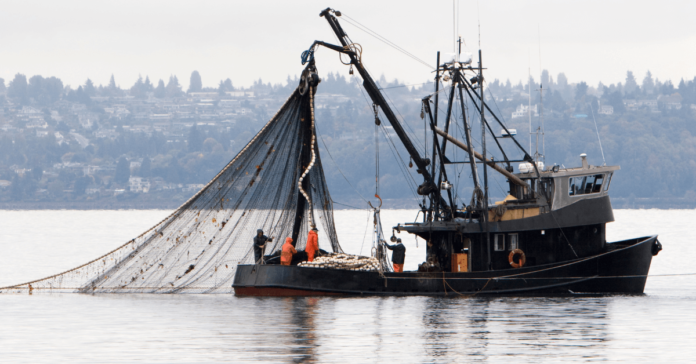
The Strait of Hormuz closure and attacks on energy infrastructure since late February are now formally recognised as causing significant market disruption, triggering EMFAF emergency aid for fishing and fish farming operators across the EU
April 16th, 2026 — The Commission has formally declared the Middle East crisis an exceptional event under EU fisheries law, unlocking emergency funding for fishing and aquaculture operators across the Union under Article 26(2) of the EMFAF Regulation. The decision, adopted and published on the same day, backdates eligibility to 28 February 2026, that being the date of the first airstrikes against Iran, and makes EU fishing and fish farming businesses eligible for support under the European Maritime, Fisheries and Aquaculture Fund (EMFAF) through the end of the year.
Two separate shocks are driving the disruption: attacks on energy infrastructure and the closure of the Strait of Hormuz have pushed global oil prices sharply higher. At the same time, commercial shipping through both the Strait and the Suez Canal has been partially or fully suspended, cutting off key supply chains from Asia. Air freight routes through the region have also been affected, as airports in affected countries have come under attack.
For EU fishing fleets, higher fuel costs are the most immediate problem. Fuel accounts for between 25% and 50% of variable operating costs on most fishing vessels. When oil prices spike sharply, individual fishing trips can stop being economically viable altogether, and the Commission confirms that part of the EU fleet has already halted operations for exactly that reason. Mediterranean fleets face an additional risk on top of the economics: the threat of military activity in the area has led some vessels to suspend operations as a precautionary safety measure.
Aquaculture operators are being hit differently. Feed is the largest single input cost in fish farming, and feed ingredients, including fishmeal and other marine products, move through the same disrupted trade corridors. Equipment and processing inputs sourced from Asia are also affected. The crisis is reaching aquaculture through supply-side costs rather than fuel prices directly, but the financial pressure is real either way.
Support under EMFAF Article 26(2) is available to fishing and aquaculture operators, as well as recognised producer organisations storing fishery products under the EU’s market stabilisation rules. Eligible costs must be incurred between 28 February and 31 December 2026, with payments allowed until 31 December 2029.
Operators and national managing authorities should note one important limitation. EMFAF Article 26(2) support is tied specifically to marketing, quality, and value-added activities. It does not provide direct compensation for lost revenue or higher fuel costs. The mechanism is designed to stabilise market organisation, supporting storage operations and preventing price collapse, not to replace income or subsidise operating costs directly. Operators looking for that kind of direct support will need to look to national measures or state aid frameworks instead.
Extended Analysis:
This Content Is For Members Only
The speed of this decision is notable, as the Commission adopted and published it on the same day, which is unusual for a formal implementing act. Eligibility was backdated to the first day of the crisis rather than the date of the decision. Both choices reflect political pressure from Mediterranean member states whose fleets are most exposed, and a broader awareness that the fisheries sector cannot absorb a prolonged shock without rapid institutional response.
That said, the EMFAF mechanism has real limits, and it is worth being direct about them. The support available under Article 26(2) cannot be repurposed for direct income support or fuel cost relief. It flows through marketing, storage, and value-added channels. This means the operators who have halted fishing entirely because the economics no longer work, are not the primary beneficiaries of this particular instrument. They need liquidity, but EMFAF’s Article 26(2) does not provide that.
What the mechanism does well is address the downstream market problem. When supply drops sharply and unpredictably, fish prices become volatile and producer organisations struggle to match buyers with sellers at stable prices. The storage support provisions exist to buffer that dynamic, taking product off the market temporarily to prevent price collapse and then releasing it when conditions stabilise. That is a genuine function, but it is a different function from crisis income replacement.
Member states have some flexibility to redirect resources within their EMFAF programmes, and the eligibility window through December 2026 gives them time to make those adjustments. But operators and their advisers should approach the national managing authorities now, rather than waiting, to understand what will actually be available and on what timeline. The Commission has provided the legal basis, but the operational decisions remain a matter for member states.
The broader significance of this decision goes beyond fisheries, given a reference that was included in the test to the European Council conclusions of 19 March 2026. By the time EU heads of government were formally addressing the Middle East situation at that level, the crisis had already moved beyond a regional disruption into something with EU-wide economic consequences. This allows us to speculate that this decision is one instrument in what is likely to become a wider upcoming response package, potentially including trade policy adjustments, energy market interventions, and dedicated crisis support instruments beyond the structural funds.
If the Middle East situation continues to deteriorate, more targeted legislative responses are likely to follow.
