
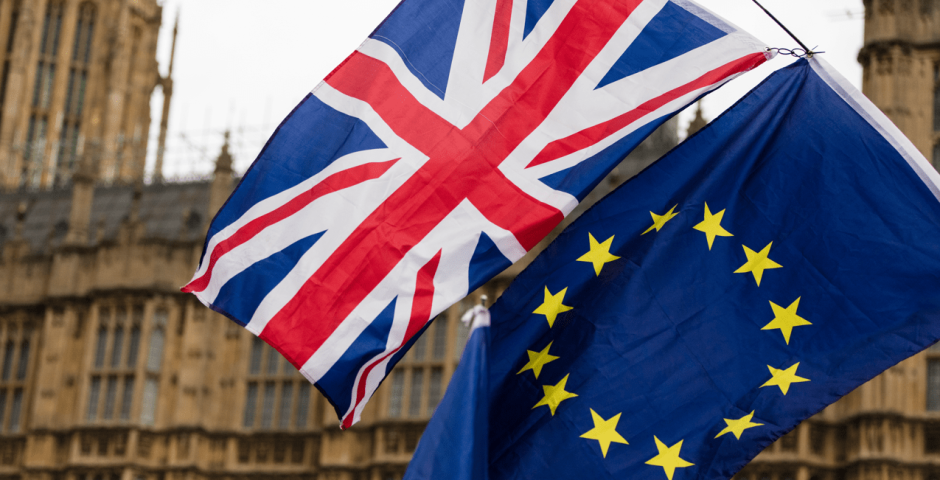
Two Council Decisions set EU positions on UK rejoining the Erasmus+ exchange programme it abandoned in 2020
April 10th, 2026 – Council Decisions 2026/832 and 2026/833, adotped on the same date and published today, establish the positions the EU is authorised to take in two separate specialised committess created under the EU-UK Trade and Cooperation Agreement (TCA), that is, that each decision pre-authorises the EU’s vote on a specific act those committees are to adopt, which includes the inclusion of the UK in the Erasmus+ program.
Decision 2026/833 particularly stands out, as it authorises the EU position in the Trade Specialised Committee on Participation in Union Programmes regarding amendments to Protocol I of the TCA. This Protocol governs which EU programes the United Kingdom participates in and contributes to financially, with the amendment formally adding Erasmus+ to that list, meaning that the UK will participate on the program beginning on January 1st, 2027. The financial terms are notable, as rather than applying the standard contribution under Article 714(6), the UK’s contribution will be set at 70% of that standard. This discounted entry rate reflects the fact that UK entities will not be eligible for EU funding commitments from budget years 2021 through 2026.
The arrangement is subject to a review ten months after participation begins, in 2037, at which point the specialised committee may propose adjustments. The participation of the UK in the program is also conditional on the designation of a national agency and independent audit body, meeting the requirements of the Erasmus+ Regulation (EU) 2021/817, and on Commission acceptance of that agency’s ex ante compliance assessment. Reciprocity provisions are also updated to allow EU entities to participate in equivalent UK programmes in areas of Horizon and the Nuclear Research Programme, in accordance with UK law.
Meanwhile, Decision 2026/832 authorises the EU position in the Trade Specialised Committee on Level Playing Field for Open and Fair Competition and Sustainable Development regarding the establishment of a roster of experts to serve on panels under Article 409 of the TCA. This article governs the expert panel mechanism for resolving disputes arising under the TCA’s level playing field provisions, covering labour standards, environmental law, and sustainable development commitments.
The list, which is annexed to the Decision, names six individuals nominated by the EU, five by the UK, and seven proposed as eligible to serve as panel chairpersons. Candidates for this position must be nationals of neither party, serving in an individual capacity, and therefore not taking instructions from either party or holding positions in EU institutions or the governments of UK or Member States.
The UK’s return to Erasmus+ nevertheless remains the most politically visible element of post-Brexit EU-UK relations, in a context where the UK pivots closer to the EU facing a challenging relationship with the US. The move also ends a four-year absence that followed the UK’s exclusion upon leaving the EU. It is also quite notable that EU entities will be allowed to participate in UK programmes on Nuclear Research, with the UK being a nuclear power itself, mirroring recent debates on the neccessity of an own nuclear umbrella for the EU spearheaded by figures like Emmanuel Macron.
